

In the industrial landscape, managing smoke stack exhaust is a critical aspect of environmental compliance and operational efficiency. As a leading supplier of smoke stack exhaust solutions, I've witnessed firsthand the transformative power of thermal oxidizers in this domain. This blog aims to demystify how thermal oxidizers work in a smoke stack exhaust system, highlighting their significance and the benefits they offer to industries.
The Basics of Smoke Stack Exhaust
Smoke stack exhaust is a by - product of various industrial processes, including manufacturing, power generation, and chemical processing. These exhausts often contain a mixture of pollutants such as volatile organic compounds (VOCs), hazardous air pollutants (HAPs), and particulate matter. Releasing these pollutants directly into the atmosphere can have severe environmental and health implications, including air pollution, smog formation, and respiratory diseases.
That's where our For Industry Use Smoke Stack Exhaust Kit comes into play. It provides a comprehensive solution for industries to manage their exhaust effectively, but when dealing with more complex and harmful pollutants, a thermal oxidizer becomes an essential addition.
How a Thermal Oxidizer Works
A thermal oxidizer is a device designed to break down harmful pollutants in the exhaust gas stream through a high - temperature oxidation process. The basic principle behind a thermal oxidizer is to raise the temperature of the exhaust gas to a level where the pollutants react with oxygen, converting them into less harmful substances such as carbon dioxide and water vapor.
1. Pre - treatment
Before the exhaust gas enters the thermal oxidizer, it often undergoes pre - treatment. This step is crucial for removing large particulate matter and any substances that could potentially damage the oxidizer or reduce its efficiency. For example, filters may be used to trap dust and debris, and condensers can be employed to remove moisture from the gas stream. Our Smoke Stack Exhaust Kit For Industry can be equipped with pre - treatment components to ensure the smooth operation of the thermal oxidizer.
2. Heating the Exhaust Gas
Once the exhaust gas has been pre - treated, it enters the combustion chamber of the thermal oxidizer. Here, the gas is heated to a specific temperature, typically between 760°C and 1090°C (1400°F and 2000°F), depending on the type of pollutants present. The heat can be generated by various means, such as natural gas burners or electric heaters.
3. Oxidation Process
At the high temperatures inside the combustion chamber, the pollutants in the exhaust gas react with oxygen in a process known as oxidation. For example, VOCs, which are common pollutants in industrial exhausts, react with oxygen to form carbon dioxide and water. This chemical reaction breaks down the complex organic molecules into simpler, less harmful compounds.
4. Heat Recovery
To improve the energy efficiency of the thermal oxidizer, many modern systems are equipped with heat recovery mechanisms. After the oxidation process, the hot exhaust gas leaving the combustion chamber passes through a heat exchanger. In the heat exchanger, the hot gas transfers its heat to the incoming exhaust gas, pre - heating it before it enters the combustion chamber. This reduces the amount of energy required to heat the gas to the oxidation temperature, resulting in significant energy savings.
5. Emission Control
After passing through the heat exchanger, the treated exhaust gas is then released into the atmosphere through the smoke stack. The thermal oxidizer is designed to achieve a high destruction efficiency, typically over 99% for most VOCs and HAPs. This ensures that the pollutants in the exhaust gas are reduced to levels that comply with environmental regulations.
Types of Thermal Oxidizers
There are several types of thermal oxidizers, each with its own advantages and applications.
Direct - Fired Thermal Oxidizers
Direct - fired thermal oxidizers are the simplest type. They use a burner to directly heat the exhaust gas in the combustion chamber. These oxidizers are suitable for applications where the exhaust gas flow rate is relatively low and the pollutant concentration is high.

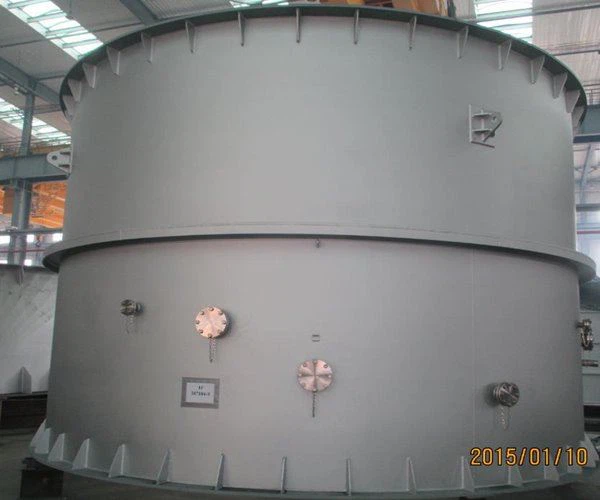
Regenerative Thermal Oxidizers (RTOs)
RTOs are highly energy - efficient thermal oxidizers. They use a series of ceramic beds to store and transfer heat. As the exhaust gas enters the RTO, it passes through a pre - heated ceramic bed, which pre - heats the gas. After oxidation in the combustion chamber, the hot exhaust gas passes through another ceramic bed, transferring its heat to the bed. This cyclic process allows RTOs to recover up to 95% of the heat, making them ideal for high - flow, low - concentration exhaust applications.
Catalytic Thermal Oxidizers
Catalytic thermal oxidizers use a catalyst to lower the oxidation temperature of the pollutants. The catalyst provides a surface for the chemical reaction to occur at a lower temperature, typically between 260°C and 480°C (500°F and 900°F). This reduces the energy consumption of the oxidizer and is suitable for applications where the exhaust gas contains easily oxidizable pollutants.
Benefits of Using a Thermal Oxidizer in Smoke Stack Exhaust
Environmental Compliance
One of the primary benefits of using a thermal oxidizer is that it helps industries comply with strict environmental regulations regarding air pollution. By breaking down harmful pollutants into less harmful substances, thermal oxidizers reduce the impact of industrial exhaust on the environment and human health.
Energy Efficiency
As mentioned earlier, modern thermal oxidizers are designed with energy - saving features such as heat recovery systems. This not only reduces the operating costs of the industrial facility but also makes the overall process more sustainable.
Process Safety
Thermal oxidizers can also improve process safety by reducing the concentration of flammable and explosive pollutants in the exhaust gas. By oxidizing these pollutants, the risk of fire and explosion in the smoke stack and other parts of the exhaust system is significantly reduced.
Our Smoke Stack Exhaust Solutions
As a supplier of smoke stack exhaust solutions, we offer a range of products to meet the diverse needs of industries. Our Hugh Smoke Stack Exhaust Kit is a robust and reliable solution that can be customized to include a thermal oxidizer. Whether you are looking for a direct - fired thermal oxidizer for a small - scale operation or a large - scale RTO for a high - volume industrial facility, we have the expertise and products to provide you with the right solution.
Contact Us for Procurement
If you are interested in learning more about our smoke stack exhaust solutions, including thermal oxidizers, we encourage you to contact us for a detailed discussion. Our team of experts is ready to assist you in selecting the most suitable products for your specific needs and to provide you with a competitive quote. We are committed to helping you achieve environmental compliance while optimizing your operational efficiency.
References
- "Air Pollution Control: A Design Approach" by Neil C. Donnelly
- "Thermal Oxidation of Volatile Organic Compounds" by the United States Environmental Protection Agency