

Hangguo:Your Professional Waste Incinerator Manufacturer!
Hangzhou Hangguo General Equipment Co., Ltd. has been established since December, 2000. As a subsidiary of XIZI Clean Energy Equipment Manufacturing Co,.tld.(Stock code:002534)the Company specializes in the design and manufacture of auxiliary engine and heavy duty equipment for boilers. The company has produced 115 sets of flue gas bypass systems and 152 sets of flue gas baffle doors, covering all continents in the world.
-
![Direct Push Grate for Incunerator]() Direct Push Grate for IncuneratorAdvantages: unitized and molded air supply and ash discharge, each unit material layer and speed can be adjusted independently during operation, air supply unit can be adjusted, and grate plate wearread more
Direct Push Grate for IncuneratorAdvantages: unitized and molded air supply and ash discharge, each unit material layer and speed can be adjusted independently during operation, air supply unit can be adjusted, and grate plate wearread more -
![Two-stage Reciprocating Refuse Incinerator]() Two-stage Reciprocating Refuse IncineratorA material layer adjustment device is set at the end of the thrust furnace grate, which is especially suitable for incineration to deal with domestic garbage with large physical component fluctuationsread more
Two-stage Reciprocating Refuse IncineratorA material layer adjustment device is set at the end of the thrust furnace grate, which is especially suitable for incineration to deal with domestic garbage with large physical component fluctuationsread more -
![Two-stage Refuse Incinerator With Large Physical Component Fluctuations]() Two-stage Refuse Incinerator With Large Physical Componen...A material layer adjustment device is set at the end of the thrust furnace grate, which is especially suitable for incineration to deal with domestic garbage with large physical component fluctuationsread more
Two-stage Refuse Incinerator With Large Physical Componen...A material layer adjustment device is set at the end of the thrust furnace grate, which is especially suitable for incineration to deal with domestic garbage with large physical component fluctuationsread more -
![Two-stage Refuse Incinerator For Domestic Garbage]() Two-stage Refuse Incinerator For Domestic GarbageA material layer adjustment device is set at the end of the thrust furnace grate, which is especially suitable for incineration to deal with domestic garbage with large physical component fluctuationsread more
Two-stage Refuse Incinerator For Domestic GarbageA material layer adjustment device is set at the end of the thrust furnace grate, which is especially suitable for incineration to deal with domestic garbage with large physical component fluctuationsread more -
![Two-stage Smokeless Incinerator]() Two-stage Smokeless IncineratorA material layer adjustment device is set at the end of the thrust furnace grate, which is especially suitable for incineration to deal with domestic garbage with large physical component fluctuationsread more
Two-stage Smokeless IncineratorA material layer adjustment device is set at the end of the thrust furnace grate, which is especially suitable for incineration to deal with domestic garbage with large physical component fluctuationsread more -
![A Two-stage Treatment For Municipal Solid Waste Incineration]() A Two-stage Treatment For Municipal Solid Waste IncinerationA material layer adjustment device is set at the end of the thrust furnace grate, which is especially suitable for incineration to deal with domestic garbage with large physical component fluctuationsread more
A Two-stage Treatment For Municipal Solid Waste IncinerationA material layer adjustment device is set at the end of the thrust furnace grate, which is especially suitable for incineration to deal with domestic garbage with large physical component fluctuationsread more -
![Two-stage Refuse Incinerator]() Two-stage Refuse IncineratorA material layer adjustment device is set at the end of the thrust furnace grate, which is especially suitable for incineration to deal with domestic garbage with large physical component fluctuationsread more
Two-stage Refuse IncineratorA material layer adjustment device is set at the end of the thrust furnace grate, which is especially suitable for incineration to deal with domestic garbage with large physical component fluctuationsread more -
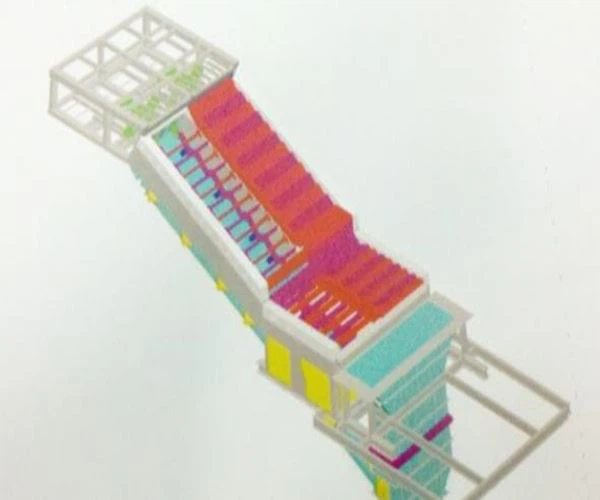
![Push Forward Integral Incinerator System]() Push Forward Integral Incinerator SystemPush grate section: Completely burnt out. Material layer adjustment device: It has good adaptability to different kinds of garbage. Push grate inclination Angle: 15°read more
Push Forward Integral Incinerator SystemPush grate section: Completely burnt out. Material layer adjustment device: It has good adaptability to different kinds of garbage. Push grate inclination Angle: 15°read more


Why Choose Us
Rich Experience
Hangguo has been developing, designing and manufacturing bypass systems for more than 20 years, the bypass systems of T130, FT8,5B, 6B, 6FA, 9E, 7FA, V94.2, SGT5-4000F, SGT5-5000F, 9F, 9HA, Sgt5-8000h and M701J have been successfully developed, designed and manufactured.
Our Products
Our products cover GE, Siemens, MHI,Ansaldobreda and other major gas engine suppliers of various main power generation, models, the company supplies 126 sets of gas engine bypass system, among them, 48 sets of 9F and above gas turbine bypass chimney supply performance.
High Quality
Our company has established a sound quality management system and passed the approval of ISO9000, ISO14000 and OHSAS18001 China quality certification center. The company has been awarded the title of "advanced enterprise of social responsibility" by hangzhou municipal people's government, and is the cultivation enterprise of hidden champion in yuhang district.
Advanced Equipment
Our company has advanced machining equipment, including CNC gantry cutting machine, horizontal 8-meter lathe, gantry planer, boring machine, hydraulic bending machine, automatic welding machine, CNC machining center and other advanced equipment, capable of processing various parts. In addition, it also has a large number of processing equipment such as lathe, milling, planing, grinding, boring, slotting machine, etc., which can meet the processing needs of various parts, as well as key equipment and facilities such as large shot blasting room and paint spraying room.
Advantages of Waste Incinerator
Efficient Waste Management: One of the primary advantages of a waste incinerator is its ability to effectively manage and dispose of waste. By utilizing high temperatures, these incinerators can efficiently break down various types of waste materials, including hazardous substances and medical waste.
Reduction in Landfill Space: As landfills continue to fill up at an alarming rate, it is crucial to find alternative methods for waste disposal. A waste incinerator offers a solution by significantly reducing the amount of waste that ends up in landfills. This not only helps preserve valuable land resources but also reduces environmental pollution caused by decomposing organic matter.
Energy Generation: Another significant advantage is the potential for energy generation through the process of incineration. Many modern incinerators are designed with state-of-the-art technology that allows them to convert heat produced during combustion into electricity or heat energy, which can be used to power nearby facilities or provide district heating systems.
Emission Control Systems: To address concerns about air pollutants emitted during the incineration process, waste incinerators incorporate advanced emission control systems. These include gas cleaning technologies such as electrostatic precipitators and scrubbers, ensuring that harmful emissions are minimized and comply with strict environmental regulations.
Resource Recovery: Waste incinerators often have integrated systems for resource recovery from solid residues generated after combustion. The remaining ash can be processed further to recover metals like aluminum and ferrous metals, which can then be recycled rather than being disposed of as landfill material.
Reduced Carbon Footprint: By diverting large volumes of waste away from landfills and harnessing energy from the combustion process, waste incinerators contribute towards reducing greenhouse gas emissions when compared to traditional landfill-based disposal methods.
Application of Waste Incinerator
Medical Waste Incineration
Medical waste incineration is a crucial aspect of waste management. It involves burning medical waste, such as syringes and contaminated materials, at high temperatures to destroy harmful pathogens and reduce the volume of waste.Incineration facilities specifically designed for medical waste treatment ensure that hazardous substances are safely disposed of without posing a risk to public health or the environment.
Municipal Waste Incineration
Municipal waste incineration is an important strategy to control the growing amount of waste generated by cities and generate energy. Municipal waste incineration is a method of treating waste by burning it in a waste incinerator. This process helps in reducing the amount of solid waste and generates energy.
Industrial Waste Incineration
Industrial waste incineration is a process used to burn and destroy hazardous materials produced by industries. It involves high-temperature combustion to eliminate contaminants and reduce the volume of waste.Incinerators, also known as thermal treatment facilities, are used for this purpose. By burning industrial waste, harmful substances can be eliminated, reducing their impact on the environment.
Hazardous Waste Incineration
Hazardous waste incineration is a method of burning dangerous materials at very high temperatures to eliminate harmful substances. This process takes place in special facilities called incinerators or thermal treatment facilities.Hazardous waste, which includes toxic chemicals and other harmful substances, is burned to destroy contaminants and reduce the environmental impact. Incineration helps prevent these hazardous materials from polluting the air, soil, and water systems.

Components of Waste Incinerator
Waste Bunker: A large storage area where incoming waste is deposited before processing.
Waste Gate: Controls the flow of waste from the bunker into the combustion chamber.
Waste Conveyor: A belt or other mechanism that transports waste into the incinerator.
Grates or Feeder System: These mechanisms move the waste through the combustion chamber to ensure proper exposure to heat and complete burning.
Primary Chamber: Waste is initially burned at high temperatures. Some facilities might utilize auxiliary burners to help initiate combustion.
Secondary Chamber: The hot gases and partially burned materials from the primary chamber enter here. This chamber maintains even higher temperatures to ensure complete combustion and minimize harmful byproducts.
Air Supply System: Provides a controlled flow of air to the combustion chambers to maintain efficient burning.
Heat Exchanger: Captures heat from the flue gas to potentially generate steam for electricity production.
Spray Dry Absorber (or similar technology): Neutralizes acid gases like sulfur dioxide and hydrogen chloride in the flue gas using a slurry or spray injection.
Fabric Filter Bag House: Removes fine particulates like soot and ash from the flue gas using fabric filters.
Electrostatic Precipitator: An additional system that uses an electrical charge to capture even finer particles from the flue gas.
Flue Gas Stack: The tall chimney through which the cleaned exhaust gases are released into the atmosphere.
Ash Pit: Collects the bottom ash, the heavier residue that falls from the bottom of the combustion chamber.
Fly Ash Collection System: Captures the fine fly ash particles carried by the flue gas, often removed during the air pollution control process.
Ash Conveyor: Transports both bottom ash and fly ash for further processing or disposal.
Continuous Emission Monitoring System (CEMS): Continuously monitors and records emissions of pollutants like nitrogen oxides, sulfur oxides, and particulates to ensure compliance with regulations.
Control System: Monitors and regulates various aspects of the incineration process including combustion temperature, airflow, and pollution control equipment operation.
The Waste Incineration Process
Every incinerator is unique, but the most common technique is called “mass burn.” The general process followed in a mass burn incinerator includes five steps.
Waste preparation
Oversized items are removed and certain recyclables like metals are recovered. The remaining waste is often shredded before it enters the incinerator.
01
Combustion
Waste is burned in an oxygenated single combustion chamber. Materials are burned at extremely high temperatures of 1,800-2,200 degrees Fahrenheit. At those temperatures, waste should be completely combusted, leaving nothing but gases and ash.
02
Energy recovery
The gases released during combustion are cooled with water, generating steam through heat recovery. The steam is used to power electrical generators.
03
Environmental control
The cooled gas is treated by scrubbers, precipitators, and filters to remove pollutants. The solids that form during treatment, called residuals, are disposed of in a landfill.
04
Environmental release
The treated gas is released into the atmosphere. There should be no visible smoke from the smokestack because the remaining gases should be free from particulates.
05
Packaging and Shipping

Our Certificates

FAQ
We're professional waste incinerator manufacturers and suppliers in China for over 20 years, featured by good service and competitive price. We warmly welcome you to buy high quality waste incinerator made in China here from our factory.
Push Forward Integral Incinerator System, incinerator waste returns, incinerator waste heat boiler