

As a supplier of duct diverter dampers, I understand the importance of effective control methods in ensuring the optimal performance of these crucial components in ventilation and air - handling systems. In this blog, I'll delve into the typical control methods for a duct diverter damper, providing insights into how they work and their respective advantages.
Manual Control
Manual control is the most basic and straightforward method for operating a duct diverter damper. This involves physically adjusting the damper's position using a handle or lever. One of the main advantages of manual control is its simplicity. There are no complex electrical or pneumatic systems to install or maintain, making it a cost - effective option for small - scale applications or systems where the damper position doesn't need to be changed frequently.
For instance, in a small workshop with a simple ventilation system, a manual duct diverter damper can be used to direct airflow between different areas as needed. The operator can easily adjust the damper to ensure proper air distribution based on the specific tasks being carried out in the workshop.
However, manual control also has its limitations. It requires direct human intervention, which means that the damper's position cannot be changed automatically in response to changing conditions such as temperature, pressure, or airflow. Additionally, it may not be practical for large - scale or hard - to - reach dampers.
Pneumatic Control
Pneumatic control systems use compressed air to actuate the duct diverter damper. These systems typically consist of a pneumatic actuator, a control valve, and a source of compressed air. The control valve regulates the flow of compressed air to the actuator, which in turn moves the damper to the desired position.
One of the key advantages of pneumatic control is its fast response time. Pneumatic actuators can move the damper quickly, making them suitable for applications where rapid changes in damper position are required. They are also relatively simple and reliable, with fewer moving parts compared to some other control methods.
In industrial settings, pneumatic - controlled duct diverter dampers are often used in processes where precise and rapid airflow control is necessary. For example, in a chemical plant, pneumatic dampers can be used to quickly redirect exhaust gases in case of an emergency or to adjust the airflow in different sections of the plant based on the production process.
However, pneumatic control systems require a source of compressed air, which adds to the overall cost and complexity of the system. There is also a risk of air leaks, which can affect the performance of the system and lead to increased energy consumption.
Electric Control
Electric control is another widely used method for operating duct diverter dampers. Electric actuators are used to move the damper, and they can be controlled by a variety of electrical signals. Electric Diverter Damper systems offer several advantages.
Firstly, they can be easily integrated with building automation systems. This allows for centralized control of multiple dampers, enabling the system to respond to various inputs such as temperature sensors, occupancy sensors, and pressure sensors. For example, in a large commercial building, electric duct diverter dampers can be adjusted automatically based on the occupancy levels in different areas of the building, ensuring efficient use of energy.
Secondly, electric actuators are generally more precise than pneumatic actuators. They can provide accurate positioning of the damper, which is crucial for applications where precise airflow control is required.
However, electric control systems can be more expensive to install and maintain compared to pneumatic or manual systems. They also require a reliable power supply, and in case of a power outage, the dampers may lose their ability to operate.
Motorized Control
Motorized control is a type of electric control that uses a motor to drive the damper. These motors can be either AC or DC, depending on the application requirements. Motorized dampers offer high torque and can handle large - sized dampers.
In HVAC systems of large buildings, motorized duct diverter dampers are often used to control the flow of air between different zones. The motor can be programmed to move the damper to specific positions at different times of the day, based on the building's heating and cooling needs.
The advantage of motorized control is its high - power output and the ability to provide continuous adjustment of the damper position. However, like other electric control methods, it is dependent on a stable power supply and requires proper maintenance to ensure long - term reliability.
Programmable Logic Controller (PLC) Control
A Programmable Logic Controller (PLC) can be used to control duct diverter dampers in a more sophisticated way. A PLC is a digital computer that can be programmed to execute a sequence of operations based on input signals. In the context of duct diverter dampers, a PLC can receive signals from various sensors such as temperature, pressure, and flow sensors, and then control the damper's position accordingly.

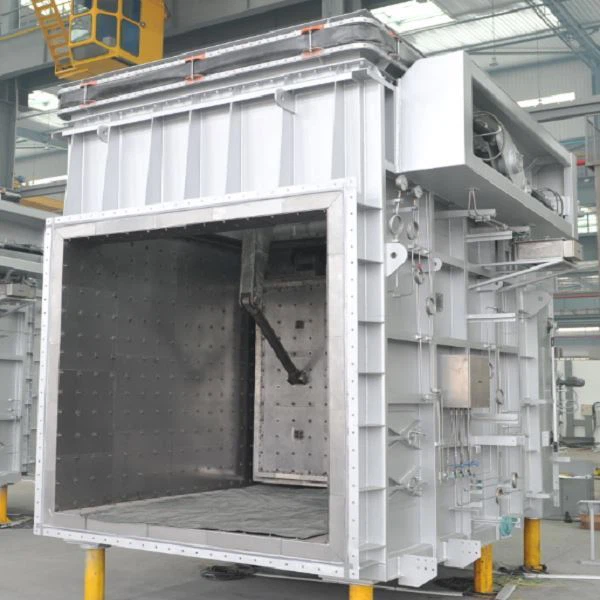
Diverter Damper Control System in Cabinet that incorporates a PLC can provide highly customized control strategies. For example, in a data center, a PLC - controlled duct diverter damper can adjust the airflow based on the heat load generated by the servers. If the temperature in a particular area of the data center rises, the PLC can send a signal to the damper to increase the airflow to that area.
The main advantage of PLC control is its flexibility and the ability to implement complex control algorithms. However, it requires a certain level of programming expertise to set up and configure the PLC, and the initial investment can be relatively high.
Fire - related Control
In some applications, especially in buildings where fire safety is a major concern, duct diverter dampers need to be controlled in a way that ensures fire protection. Fire - proof Duct Diverter Damper systems are designed to close automatically in the event of a fire.
These dampers are usually equipped with a fusible link or a thermal actuator. When the temperature in the duct reaches a certain level (typically around 70°C), the fusible link melts or the thermal actuator activates, causing the damper to close. This helps to prevent the spread of fire and smoke through the ductwork.
In addition to the automatic closing function, some fire - proof duct diverter dampers can also be integrated with the building's fire alarm system. When the fire alarm is triggered, the damper can be commanded to close, providing an extra layer of protection.
Conclusion
In conclusion, there are several typical control methods for duct diverter dampers, each with its own advantages and limitations. The choice of control method depends on various factors such as the application requirements, budget, system complexity, and safety considerations.
As a supplier of duct diverter dampers, I can offer a wide range of products with different control options to meet the diverse needs of our customers. Whether you need a simple manual damper for a small - scale project or a sophisticated PLC - controlled system for a large - scale industrial application, we have the expertise and products to provide a suitable solution.
If you are interested in learning more about our duct diverter dampers or would like to discuss your specific requirements for a project, please feel free to reach out. We are always ready to engage in a procurement discussion and help you find the best damper control solution for your needs.
References
- ASHRAE Handbook - HVAC Systems and Equipment. American Society of Heating, Refrigerating and Air - Conditioning Engineers.
- Industrial Ventilation: A Manual of Recommended Practice. American Conference of Governmental Industrial Hygienists.
- Building Automation and Control Networks (BACnet) Standard. American National Standards Institute.